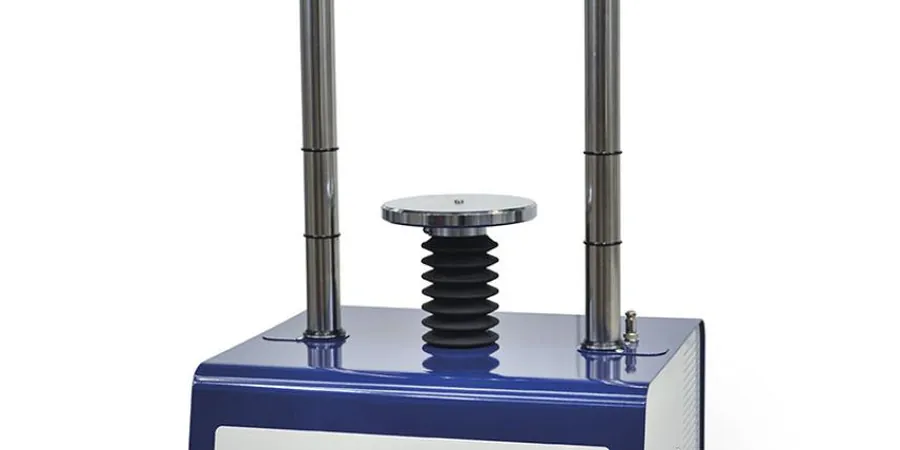
Allentown grew fast during the 19th-century industrial boom, with mills and warehouses built directly on the floodplain of the Lehigh River. That legacy means many downtown sites have variable alluvial soils — silty sands and soft clays — that behave very differently under load. Before we design a foundation or retaining wall, we run a triaxial test on undisturbed samples to capture the effective stress parameters. It is common to pair this with a consolidation test when dealing with compressible layers near the river. The data helps us set safe bearing pressures for everything from row homes to mid-rise structures. Without these numbers, you are guessing how the ground will react to construction loads.
A triaxial test on Allentown alluvial silts often shows effective friction angles between 28 and 34 degrees — critical data for retaining wall design near the Lehigh River.
Method and coverage
The Lehigh Valley sits in a karst-prone region underlain by limestone and dolomite, but the soil cover in Allentown is mostly glacial till and alluvial silts. Groundwater is shallow — typically 6 to 12 feet down — which directly affects the effective confining stress in a triaxial test. We run both consolidated-drained (CD) and consolidated-undrained (CU) cycles depending on whether the project involves rapid loading or long-term stability. For slopes near the South Mountain ridgeline we also cross-reference results with a slope stability analysis to verify factor of safety. In areas where expansive clays are present we add a swell-consolidation test to quantify heave potential. Our lab follows ASTM D2850-15 for unconsolidated-undrained (UU) and ASTM D4767-11 for consolidated-undrained with pore pressure measurement.
Technical reference image — Allentown
Regional considerations
In Allentown we often see projects where the geotechnical report only includes SPT N-values but no triaxial data. For a five-story building on the old Bethlehem Steel brownfield, that gap can be costly. The silty sands there have a high fines content that masks low drained strength; without effective stress parameters from a triaxial test you risk underestimating settlement under sustained loads. We have seen retaining walls lean 2 inches in three years because the design used undrained strengths that did not account for long-term drainage. The triaxial test closes that blind spot.
What is the difference between UU and CU triaxial tests?
The UU (unconsolidated-undrained) test applies load without allowing drainage, measuring total undrained strength — used for immediate stability under rapid construction. The CU (consolidated-undrained) test consolidates the sample under confining pressure before shearing, measuring effective stress parameters (c', phi') and pore pressure response. For Allentown alluvial soils, CU data is more reliable for long-term foundation design.
Do you accept samples from other drillers or just your own?
We accept undisturbed tube samples from any qualified driller as long as they are properly sealed, labeled, and transported to avoid disturbance. Our lab logs each sample upon arrival and checks for extrusion damage before trimming. We work with several local drilling contractors in the Lehigh Valley.
How long does a triaxial test take for a typical Allentown project?
A standard set of three UU specimens takes 5 to 7 business days. CU tests with pore pressure measurement take 7 to 10 days because of the consolidation phase. CD tests can take 10 to 14 days depending on drainage rate of the soil. We can expedite UU to 3 days for urgent foundation approvals.
What is the typical cost range for a triaxial test in Allentown?
For a standard set of three specimens, the cost typically ranges between US$1,770 and US$2,590. This includes sample preparation, testing, and a certified report with stress-strain curves and Mohr circles. Multi-stage tests or special drainage conditions may adjust the price. Contact us for a project-specific quote.
Location and service area
We serve projects across Allentown and its metropolitan area.